Emotional Support Animals play a vital role in helping people manage mental health challenges like anxiety, depression, PTSD, and chronic stress. For many tenants in the United States, an ESA provides emotional balance, daily comfort, and housing stability. As awareness grows, certain states have introduced waiting period requirements for ESA letters to protect tenants, landlords, and licensed mental health providers. Ethical platforms like RealEsaLetter help tenants navigate these requirements by connecting them with licensed professionals who follow state-specific evaluation standards.
Understanding ESA Waiting Period Requirements Across the United States
Some states require tenants to maintain a verified therapeutic relationship with a licensed mental health professional before issuing an ESA letter. This waiting period, often around 30 days, ensures that the ESA recommendation reflects a proper clinical assessment rather than instant or automated approval. These rules are designed to protect tenants by making their documentation stronger and legally defensible, while giving landlords confidence in the legitimacy of the request.
Why Waiting Period Laws Were Introduced and How They Benefit Tenants
Waiting period laws were created in response to the rise of online ESA letters issued without proper evaluation. Many landlords received letters lacking provider verification, documentation, or accountability. The laws aim to:
Reduce fraudulent ESA letters
Protect landlords and housing providers
Preserve the credibility of ESA accommodations
Ensure comprehensive mental health evaluations
Following these regulations benefits tenants because compliant ESA letters hold more weight and are less likely to be challenged.
How ESA Evaluations Work in Waiting Period States
Obtaining an ESA letter in these states involves a structured evaluation process. Initially, a licensed provider conducts a mental health intake, reviewing symptoms and assessing whether an ESA would help reduce emotional or psychological distress. Tenants maintain ongoing communication with the provider over the required waiting period. Only after this thorough evaluation is an ESA letter issued. This ensures the recommendation is based on real clinical judgment rather than convenience.
Examples of States With ESA Waiting Periods
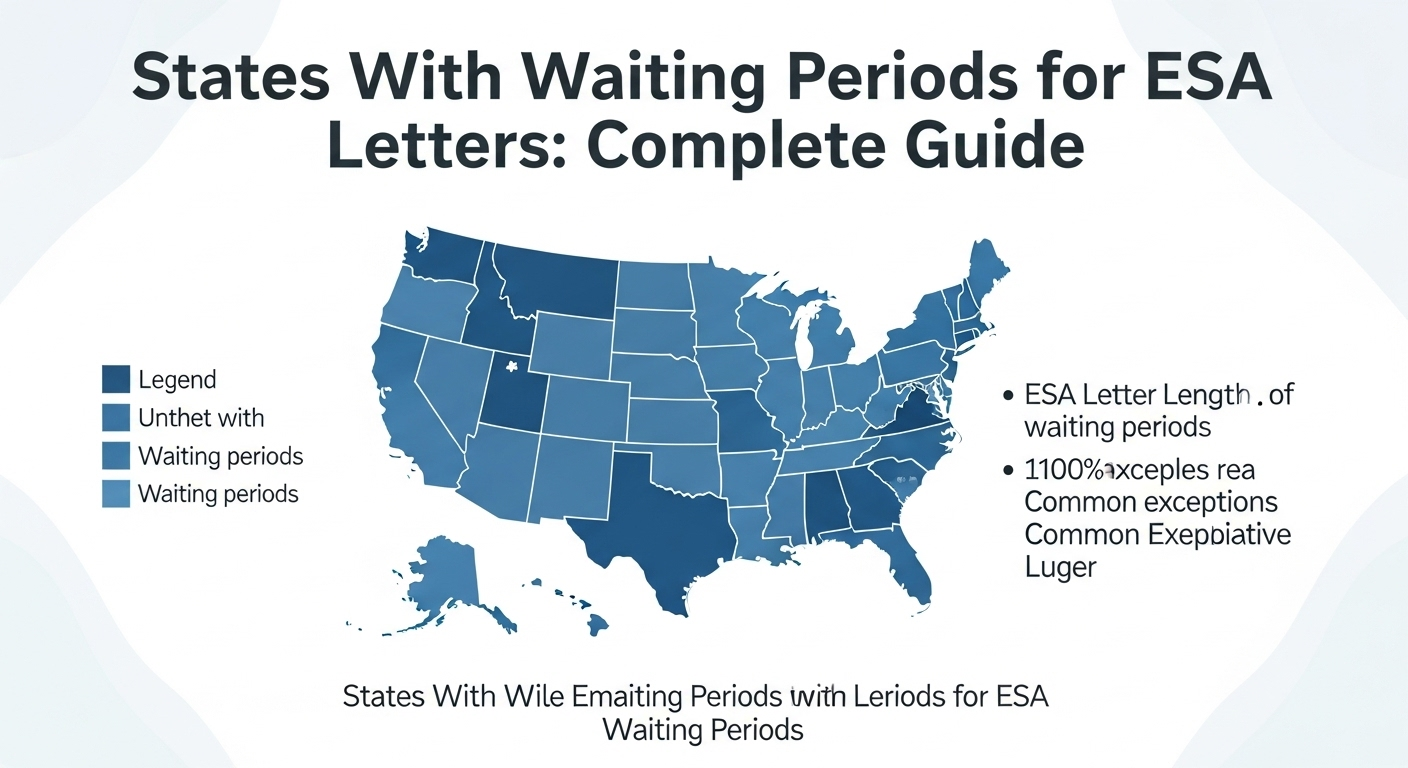
Several states enforce or encourage waiting period rules for ESA letters. These include California, Louisiana, Arkansas, Montana, and West Virginia. In these states, letters obtained without a verified provider relationship are likely to be denied. Tenants in waiting period states must comply with evaluation timelines to ensure their ESA letter is legally recognized.
Securing an ESA Letter in West Virginia
Tenants seeking an esa letter west virginia must work with a licensed mental health professional who follows federal housing laws and state evaluation rules. Instant approvals are not allowed. Providers must confirm that the ESA reduces symptoms associated with a diagnosed mental or emotional condition. Establishing a proper provider relationship ensures that the letter is legally compliant and accepted by landlords.
Understanding West Virginia ESA Laws
Under west virginia esa laws, landlords must provide reasonable accommodation for approved ESAs. This includes waiving pet deposits and fees, and they cannot enforce breed, size, or weight restrictions. Landlords may verify provider credentials and documentation but may only deny an ESA request if the animal poses a safety risk or causes significant property damage.
Legitimacy of Online ESA Letters
Many tenants ask if online ESA letters are valid. are online esa letters legit only when issued by licensed professionals who conduct real evaluations and comply with state waiting period requirements. Letters from instant approval services without a verified therapeutic relationship are often rejected and can put tenants at risk of housing complications.
ESA Letter Length, Format, and Content Requirements
A valid ESA letter must be professional, comprehensive, and clearly written to ensure it is accepted by landlords. It should include the provider’s license information, confirm that a therapeutic relationship exists between the tenant and the licensed professional, state that the emotional support animal is necessary to alleviate symptoms of a diagnosed mental or emotional condition, and be signed and dated by the provider.
Letters that are overly brief, vague, or missing any of these elements are often rejected, even if they appear to meet basic requirements. Ensuring that the letter is thorough and well-structured increases the likelihood that it will be recognized as legally valid.
Common Reasons ESA Requests Are Denied
Tenants often wonder why we turn down esa letter requests. Common reasons include missing provider licensing, insufficient therapeutic relationship, incomplete documentation, signs of misrepresentation, or fraud. Awareness of these pitfalls allows tenants to submit letters that are more likely to be accepted.
Distinguishing Pet Insurance, Pet Deposits, and ESA Letters
Understanding the differences between pet insurance vs pet deposit vs esa letter is critical. ESAs are legally distinct from pets, meaning landlords cannot charge pet deposits or fees for approved ESAs. Tenants remain financially responsible for any damages caused by their animal. Optional pet insurance can help cover unexpected costs and demonstrates responsible ownership.
Recognizing Fraudulent ESA Services
Many online services promise instant ESA letters without evaluation. fake esa sites exposed typically guarantee approval, lack a licensed provider, issue certificates instead of letters, provide no follow-up, and fail to comply with state requirements. Avoiding these platforms protects tenants from wasted money and denied housing requests.
Mental Health Benefits of Emotional Support Animals
Emotional support animals provide measurable mental health benefits. According to mental health conditions benefit most from esa companionship new survey, people with anxiety, depression, PTSD, and trauma-related conditions experience improved emotional stability, reduced stress, and better overall functioning. ESAs offer consistent support that complements professional therapy and counseling.
Telehealth Evaluations and Compliance
Many waiting period states allow telehealth ESA evaluations as long as the provider is licensed in the tenant’s state. Tenants must maintain communication throughout the required period and document interactions. Telehealth ensures convenience while complying with legal timelines.
Communicating Professionally With Landlords
Professional and clear communication improves ESA approval rates. Tenants should submit letters promptly, avoid disclosing detailed medical records, and respond calmly to verification requests. Landlords are allowed to confirm documentation but cannot demand private medical information.
Responsibilities After ESA Approval
Tenants must ensure their ESA is well-behaved, prevent property damage, follow local animal regulations, and address complaints responsibly. Mismanagement of an ESA can lead to lawful action by landlords, even when approval has been granted.
Long-Term ESA Letter Management
Although ESA letters have no federal expiration, many providers recommend yearly renewal to reflect ongoing mental health needs. Maintaining updated documentation ensures continuous housing protection and minimizes disputes.
Ethics and Future of ESA Housing Laws
Ethical ESA evaluations protect tenants, landlords, and the integrity of ESA accommodations. Following legal requirements and provider standards ensures ESAs remain respected and effective, preserving fair access to housing accommodations.
Ensuring Your ESA Letter Meets All Legal Standards
Waiting period rules exist to protect tenants, landlords, and licensed professionals. Rushing the process, using fraudulent services, or skipping evaluations leads to stress, rejection, and housing problems. By working with licensed professionals, respecting evaluation timelines, and understanding state-specific ESA laws, tenants can secure ESA accommodations confidently. Using compliant ESA processes ensures emotional support animals continue to provide meaningful mental health benefits while maintaining fairness and integrity in housing systems.